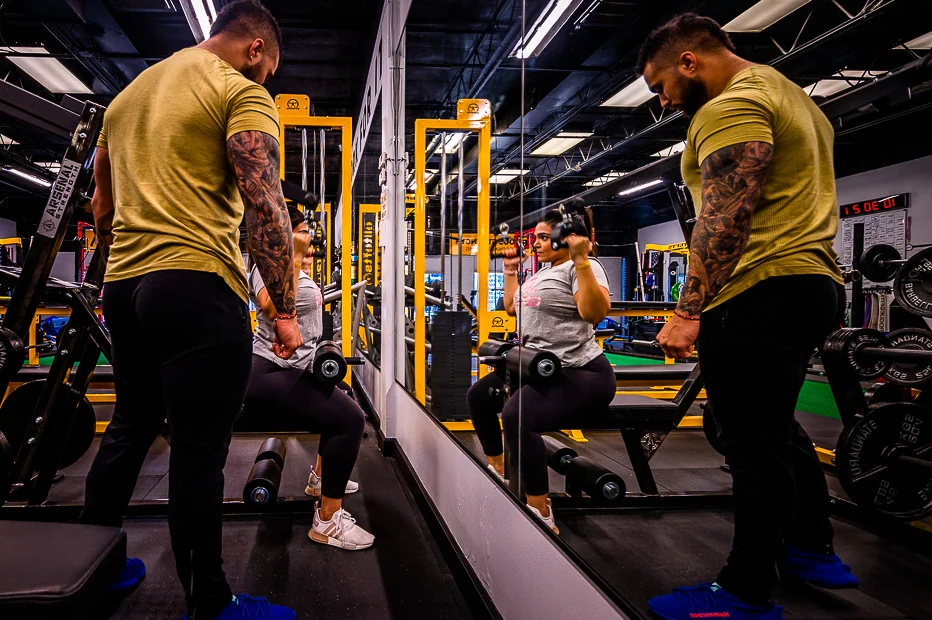
Maybe you want to carry groceries more comfortably, feel stronger on the stairs, or return to the gym after years of putting everyone else first. But one question keeps coming up: Have I left it too late to start lifting weights?
Turning 40 is not a deadline. You do not need to train like a competitive athlete, and you do not need to get fit before asking for coaching. A sensible beginning is a repeatable routine that builds confidence while leaving room for work, family and recovery.
Why Strength Training Matters After 40
Resistance training means asking your muscles to work against a load. That load might come from a machine, dumbbell, resistance band or your own body weight. It is not limited to heavy barbell lifting.
The National Institute on Aging describes strength training as a way to help maintain muscle and support physical function as people age. These benefits are relevant to everyday goals, not just appearance. See its overview of strength training and healthy aging.
Choose a goal you can recognize in daily life: lifting a suitcase, getting up from a chair, or feeling more capable during a weekend activity. A practical goal gives your training direction without relying on a dramatic transformation promise.
Start With Your Current Ability, Not Your Age Alone
Two people in their forties can have very different starting points. One may already exercise regularly; another may be returning after a long break. Past injuries, exercise experience and current health matter more than choosing a generic “over-40 workout.”
Tell your coach about relevant restrictions and previous difficulties. If you have a medical condition, recent surgery, unexplained symptoms or uncertainty about suitable exercise, ask a qualified healthcare professional for guidance. A trainer helps with exercise coaching; they do not replace medical assessment.
Do not push through sharp pain or concerning symptoms. Stop and seek appropriate advice rather than treating discomfort as proof that the workout is effective.
Build Around Two Manageable Training Days
For many beginners, two nonconsecutive full-body sessions provide a practical starting schedule—for example, Tuesday and Friday. This is a planning example, not an individual prescription. The exercises and workload still need to suit you.
The CDC’s adult activity guidance recommends muscle-strengthening activity involving all major muscle groups on at least two days each week, alongside aerobic activity. You can build toward the recommended activity levels gradually rather than trying to complete everything immediately.
Protect those appointments in your calendar. A schedule you can actually attend is more useful than a six-day plan that disappears whenever work gets busy.
Learn a Small Set of Useful Movements
Your first program does not need dozens of exercises. A coach might introduce the following movement patterns, choosing variations appropriate for you:
- Sit and stand: a controlled chair squat or another suitable squat variation.
- Push: a wall push-up or appropriately adjusted chest-press machine.
- Pull: a supported row using suitable equipment.
- Hip movement: a hip hinge or other coached variation.
- Trunk control: an exercise that helps you practice stability without losing comfortable movement.
This list is a discussion starter, not a compulsory workout. Some movements will need adapting or replacing. Ask your trainer to explain equipment setup, breathing, movement range and how to recognize when technique is changing.
Machines and free weights can both have a place. Our guide to machines versus free weights for beginners explains the differences without treating either option as the only correct choice.
Make Progress Without Rushing the Weight
Begin with a manageable challenge and controlled repetitions. You should be learning the movement, not struggling through every repetition from your first visit. Record the exercise, load and how the session felt.
Progress can mean better control, more consistent attendance, or completing the planned repetitions more comfortably. When an exercise becomes easier with reliable technique, discuss a small adjustment with your coach. Avoid increasing everything at once.
You do not need a maximum-strength test to prove that you belong in the gym. Compare your progress with your own starting point, not another person’s weights.
Give Recovery a Place in the Plan
Schedule time between demanding sessions and tell your trainer when sleep, stress or energy changes. A useful plan can be adjusted; it does not require pretending that every week feels the same.
Some muscle soreness can follow unfamiliar activity, but soreness is not the goal. Persistent pain or symptoms that interfere with normal activity deserve attention. Do not automatically repeat a difficult session just because the calendar says it is training day.
Regular meals, adequate sleep and a realistic workload support a sustainable routine. Supplements are not a prerequisite for beginning. For medical or individualized nutrition questions, consult an appropriately qualified professional.
What Should Your First Month Look Like?
Use the first month to learn and establish a baseline, rather than chasing a fixed result. Early sessions can focus on equipment familiarity and comfortable exercise choices. Later sessions can reinforce those movements and review whether the schedule and workload are suitable.
At the end of the month, ask: Am I attending consistently? Do I understand the exercises? What feels more controlled? What needs changing? These answers help shape the next phase. They are more useful than expecting a specific amount of muscle gain by a deadline.
Start With Personal Coaching in Harwood Heights
If you live in Harwood Heights, Norridge, Elmwood Park or a nearby community, Strength SPT offers a place to discuss a practical start. The studio is at 5106 N Harlem Ave, Harwood Heights, IL 60706—not a separate location in each nearby city.
Explore our private personal training studio. Before booking, share your goals, experience and availability, and ask how coaching can be tailored to your starting point.
Text us to discuss training. You do not have to make up for every inactive year in your first workout. Start with one useful step, then build a routine you can keep.
Frequently Asked Questions
Is 40 too late to start lifting weights?
No. Being over 40 does not automatically rule out strength training. Start at a level appropriate for your experience, health and abilities, and seek clinical advice when a condition or symptoms may affect exercise.
How many days a week should a beginner over 40 strength train?
Two nonconsecutive full-body sessions can be a practical starting schedule. Adjust the workload to your current ability and recovery. Adult activity guidelines recommend strengthening all major muscle groups on at least two days each week.
Should I use machines or free weights?
Either can be useful. Choose equipment you can set up and use comfortably with controlled technique. A coach can explain the options and help select exercises that fit your goals.
Do I need to get fit before working with a personal trainer?
No. Discuss your starting point, goals and any exercise restrictions before booking. Coaching can help organize an appropriate starting plan rather than requiring you to follow an advanced routine first.
Where is Strength SPT located?
Strength SPT is at 5106 N Harlem Ave, Harwood Heights, IL 60706. Contact the studio to discuss personal training, your goals and appointment availability.